 How-to
Holistic Treatment for Skin Allergies: What Helps?
Last Updated: November 13, 2026
Quick Summary
Holistic care for skin allergies combines identifying triggers, gentle skin-barrier care and a medically supervised plan that looks at sleep, stress and diet alongside the skin. Colloidal oatmeal soaks and fragrance-free moisturisers are the best-supported home steps, and homeopathy is offered only as a complementary option. Anyone with a rash that blisters, spreads or fails to improve should see a doctor first.
- Colloidal oatmeal has the best-studied evidence for reducing itching in skin conditions.
- Use a lukewarm bath soak for 10 to 15 minutes, then moisturise within three minutes.
- Apply fragrance-free moisturisers with ceramides, glycerin or petrolatum at least twice daily.
- Keep a diary for two to four weeks to track triggers, products and foods.
- Seek emergency help for lip, tongue or throat swelling or difficulty breathing.
Table of Contents
- Why Skin Allergies Need a Holistic Approach
- Natural Remedies for Itchy Skin and Skin Allergy Home Remedies
- Skin Allergy Triggers, Prevention and When to Seek Medical Care for a Skin Rash
- Frequently Asked Questions
Why Skin Allergies Need a Holistic Approach
Skin allergies often return, leaving people stuck after creams and tablets. Skin allergy to specific ingredients found in natural skincare products has more than doubled since 2007, according to the British Skin Foundation research on rising sensitivities to natural cosmetic ingredients. At Soul Homeopathic Clinic, we look at the whole person: two people with the same rash can have very different histories, triggers and routines, and sleep, stress, nutrition and emotional wellbeing all shape how the skin reacts. Homeopathy is best seen as a complementary option, it does not replace diagnosis, prescribed medicine or specialist care, and a holistic plan works best once a doctor has checked the skin first. (Source: Journal of Integrative Dermatology review)
Watch out: Some natural products contain botanical allergens. "Natural" does not always mean hypoallergenic.
Natural Remedies for Itchy Skin and Skin Allergy Home Remedies
Many people try home remedies before booking an appointment, and a few are genuinely useful, what separates a helpful remedy from a harmful one is how well it suits the skin and whether it is stopped quickly if the skin reacts.
What the evidence supports most strongly
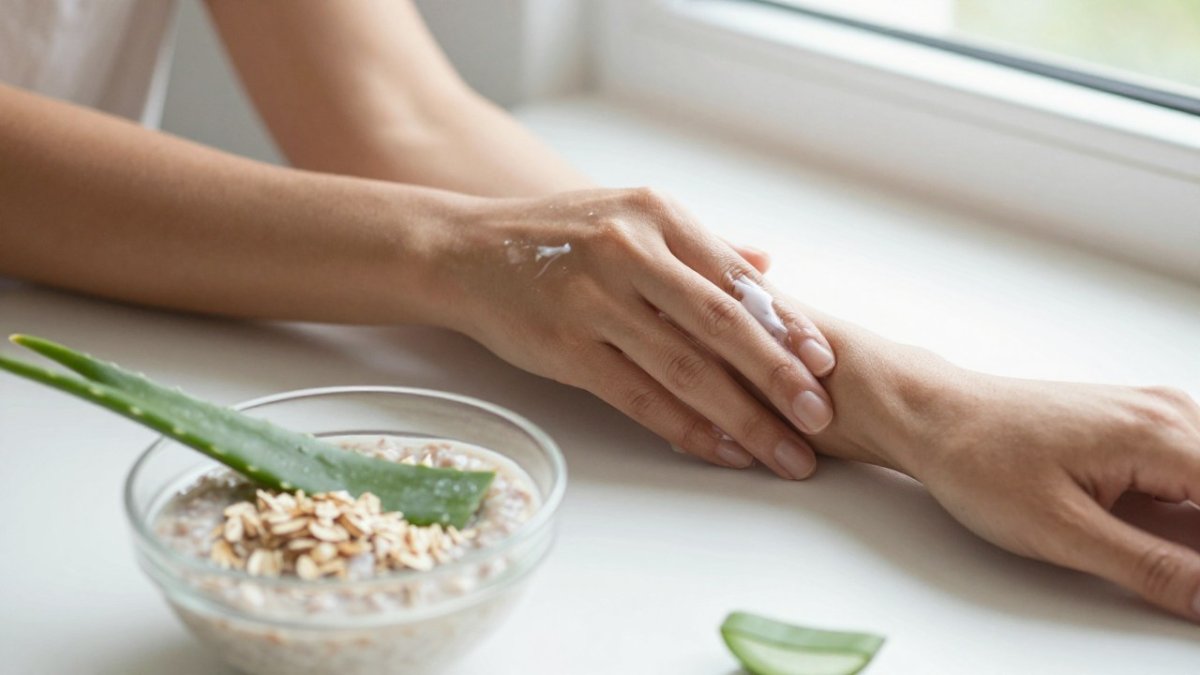
Colloidal oatmeal is the best-studied household option: Journal of Integrative Dermatology review of topical treatments for pruritus reports that formulations containing colloidal oatmeal reduced itching and lowered reliance on antihistamines. Use it as a lukewarm bath soak for 10 to 15 minutes, then moisturise within three minutes while the skin is still damp. Plain, fragrance-free moisturisers built around ceramides, glycerin or petrolatum are the second well-supported step, PMC study on skin reactions and self-reported allergies links barrier care to fewer flare-ups, applied at least twice daily. Cool compresses applied for around 10 minutes at a time are a common way to ease itching.
Remedies with traditional use but weaker evidence
Aloe vera gel soothes mild, intact skin but should not be applied to broken or weeping skin, and a small test patch is wise. National Center for Biotechnology Information review of medicinal plants for dermatologic conditions describes chamomile and calendula as anti-inflammatory, and lavender and licorice as antimicrobial, reasonable traditional options, but the evidence is preliminary and any plant can trigger a reaction in a sensitised person.
A safe order of use during a flare
Watch out: Apple cider vinegar, undiluted essential oils, baking soda pastes and lemon juice are popular online but can irritate inflamed skin.
How this fits a holistic plan
Remedies are not a substitute for diagnosis. A personalised consultation explores the pattern of flares, products and foods involved, sleep, stress and emotional load, while structured symptom mapping organises what has been tried, what helped and what triggered a reaction.
The article's main home remedies differ in how well-studied they are and in how cautiously they should be used.
| Remedy | Evidence level | Key caution |
|---|---|---|
| Colloidal oatmeal soak | Best studied | Lukewarm bath, 10-15 minutes |
| Ceramide or petrolatum moisturiser | Well supported | Apply at least twice daily |
| Aloe vera gel | Traditional use | Avoid broken or weeping skin |
| Chamomile and calendula | Preliminary | Any plant can trigger reaction |
| Apple cider vinegar | Popular online | Can irritate inflamed skin |
| Undiluted essential oils | Popular online | Can irritate inflamed skin |
Skin Allergy Triggers, Prevention and When to Seek Medical Care for a Skin Rash
Most people with recurring skin allergies can name the itch but not the cause, and identifying the trigger is often the single most useful step.
The three main trigger groups
Contact triggers, fragrances, preservatives such as methylisothiazolinone, nickel, rubber accelerators, hair dye and certain plants, often appear where the product was applied and can take 24 to 72 hours to develop. Food-related triggers are less common for isolated rash but can matter in children, especially hives within two hours of eating. Environmental triggers include pollen, house dust mite, pet dander, heat, sweat and temperature changes.
Practical exposure tracking
A simple diary kept for two to four weeks beats memory: record the date, what the skin looked like, any new product, food or environment, sleep quality and stress level. Patch testing through a dermatologist is a common way to confirm contact allergy.
Distinguishing allergy from other skin conditions
Not every itchy rash is an allergy. Eczema tends to be dry, cracked and intensely itchy in skin folds; hives are raised, move around and fade within 24 hours; fungal infections often have a raised, scaly edge and clear centre; bacterial infection shows warmth, spreading redness, pus or fever.
Prevention that actually holds up
Choose fragrance-free cleansers and moisturisers, wash new clothing before wearing, use gloves for cleaning, keep nails short, shower lukewarm rather than hot, and moisturise daily within three minutes of patting dry. Wash bedding weekly in hot water and manage dust and pet exposure in the bedroom.
Red flags that need urgent care
Seek emergency help for swelling of the lips, tongue or throat, difficulty breathing, dizziness, or a rapidly spreading rash with fever. Book a prompt medical review for a rash that blisters, weeps, becomes painful, spreads quickly, or fails to improve after a week of simple care.
When holistic care adds value
For people whose flares keep returning despite good trigger control, a personalised consultation can explore sleep, stress, diet and emotional wellbeing alongside the skin itself. Homeopathy is offered as complementary support within a medically supervised plan.
"Your Health Is Unique. Your Care Should Be Too."
Discover personalised consultations, structured symptom assessment and holistic health support at SOUL Homeopathy Medical Centre.
SOUL Homeopathy Medical Centre
WhatsApp: +971 56 808 0885
Let Your Soul Heal.
Frequently Asked Questions
What is the best holistic treatment for skin allergies?
There is no single best treatment, because skin allergies differ from person to person. A holistic approach usually combines gentle skin care, avoiding known triggers, managing stress and sleep, and a careful consultation that looks at your full health history. Colloidal oatmeal and fragrance-free moisturisers are commonly used to support the skin barrier and reduce itching, Results vary, so speak with a qualified professional before trying new remedies, particularly if you have eczema, asthma or are pregnant.
What are the common triggers of skin allergies?
Common triggers include fragrances and preservatives in cosmetics, certain plants, detergents, metals such as nickel, and some natural ingredients. Natural does not always mean hypoallergenic, since botanical ingredients can cause contact dermatitis. Keeping a simple diary of when your rash appears, what you used or ate, and where you were can help identify patterns. A clinician can then guide patch testing or further assessment if the cause is unclear.
When should I see a doctor for a skin rash?
See a doctor if a rash spreads quickly, blisters, becomes painful, shows signs of infection such as pus or warmth, or does not improve after a short period of self-care. Seek urgent medical help if you notice swelling of the lips, face or throat, breathing difficulty or dizziness, as these can signal a serious allergic reaction. Anyone with a long-term skin condition, or taking prescribed medicines, should keep their treating doctor informed about any new complementary approach.